
Why is prostate screening important?
Many prostate conditions develop silently over years without noticeable symptoms.
Modern screening strategies combine clinical parameters and advanced imaging to better assess individual risk while avoiding unnecessary procedures.
Early diagnosis offers clear advantages:
- Higher chances of successful treatment
- Less invasive therapy options
- Reduced risk of metastasis
- Prevention of advanced disease stages
PSA – An Important First Indicator
The PSA (prostate-specific antigen) test is a blood test used as an initial assessment tool.
- Elevated PSA levels may indicate prostate abnormalities
- Causes may be benign (e.g., enlargement, inflammation) or malignant
- PSA serves as an early warning marker, but is not cancer-specific
For this reason, PSA is increasingly interpreted in combination with imaging and additional parameters.
PSA Density – Improved Risk Stratification
An important complementary parameter is PSA density (PSAD), which relates the PSA value to prostate volume:
PSA density=PSA (ng/ml)Prostate volume (ml)PSA\ density = \frac{PSA\ (ng/ml)}{Prostate\ volume\ (ml)}PSA density=Prostate volume (ml)PSA (ng/ml)
- Higher PSA density: increased likelihood of clinically significant cancer
- Lower PSA density: lower risk
PSA density is particularly helpful in cases of unclear findings and supports decision-making regarding further diagnostic steps.
Prostate MRI – Precise and Non-Invasive
Multiparametric MRI (mpMRI) is a key component of modern prostate screening.
- High-resolution imaging of the prostate
- Detection of clinically significant tumors, including small lesions
- Differentiation between aggressive and less relevant findings
- Basis for targeted rather than random biopsies
MRI is one of the most reliable methods for detecting clinically significant prostate cancer and helps reduce unnecessary biopsies.
Modern Screening Approach: PSA and MRI Combined
Current prostate screening strategies follow a stepwise and individualized approach:
- PSA testing
- Risk assessment (e.g., PSA density, age, risk factors)
- Targeted MRI in case of elevated risk
This approach enables more precise diagnostics while minimizing unnecessary interventions.
Who should consider screening?
Prostate screening is particularly recommended for:
- Men aged approximately 45 years and older
- Individuals with a family history of prostate cancer
- Elevated or rising PSA levels
- Unclear urological symptoms
Your Benefits
- Early detection of clinically significant prostate cancer
- Combination of advanced diagnostic tools (PSA, PSA density, MRI)
- Improved individual risk assessment
- Reduction of unnecessary biopsies
- Personalized screening strategies
Our Commitment
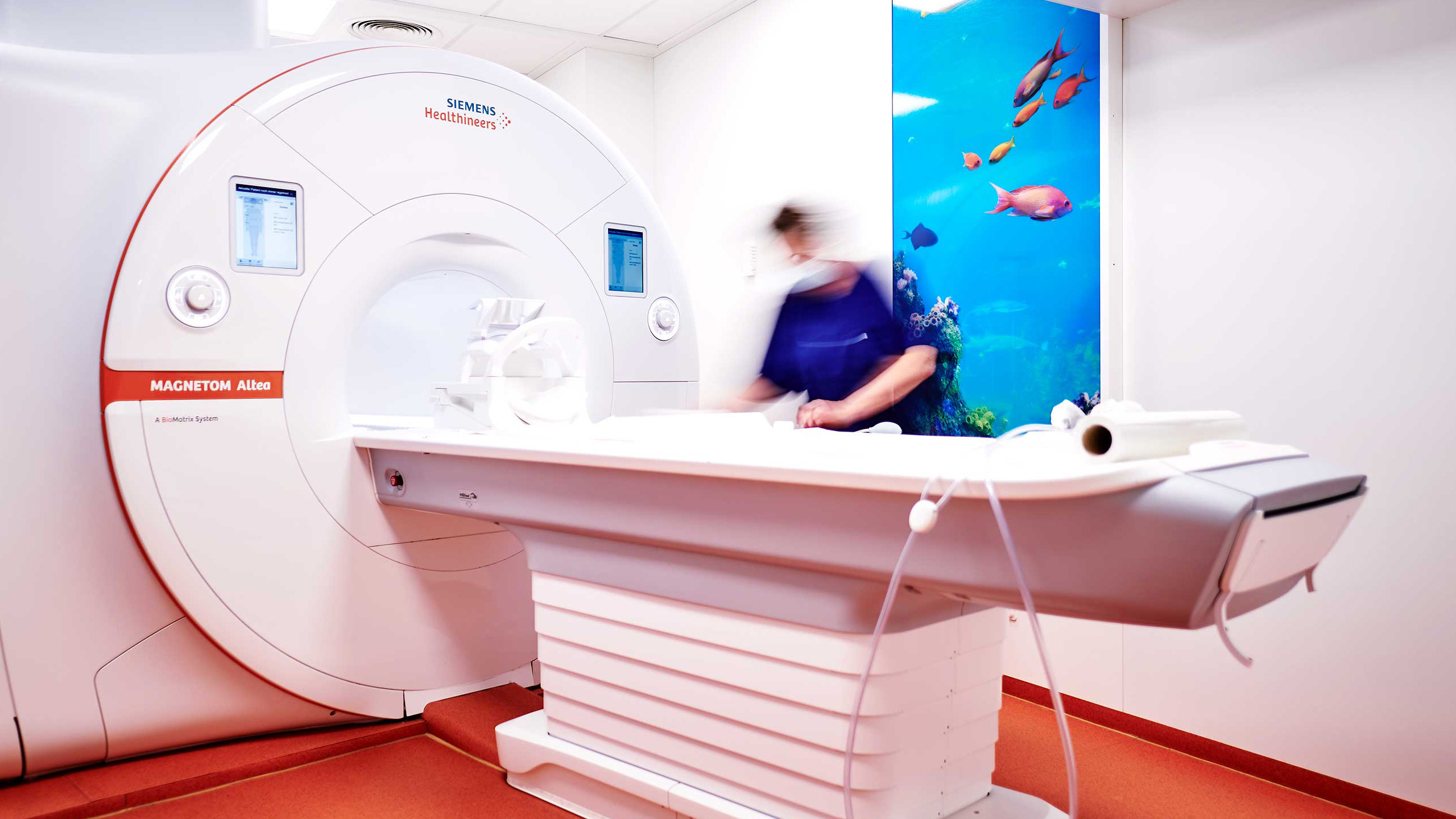
Using state-of-the-art MRI technology and specialized radiological expertise, we provide precise, safe, and individualized prostate screening—helping you make informed decisions and maintain long-term health.
Further information can be found on the pages of our Competence Center Prostate Imaging.