
Significantly Shorter Examination Times
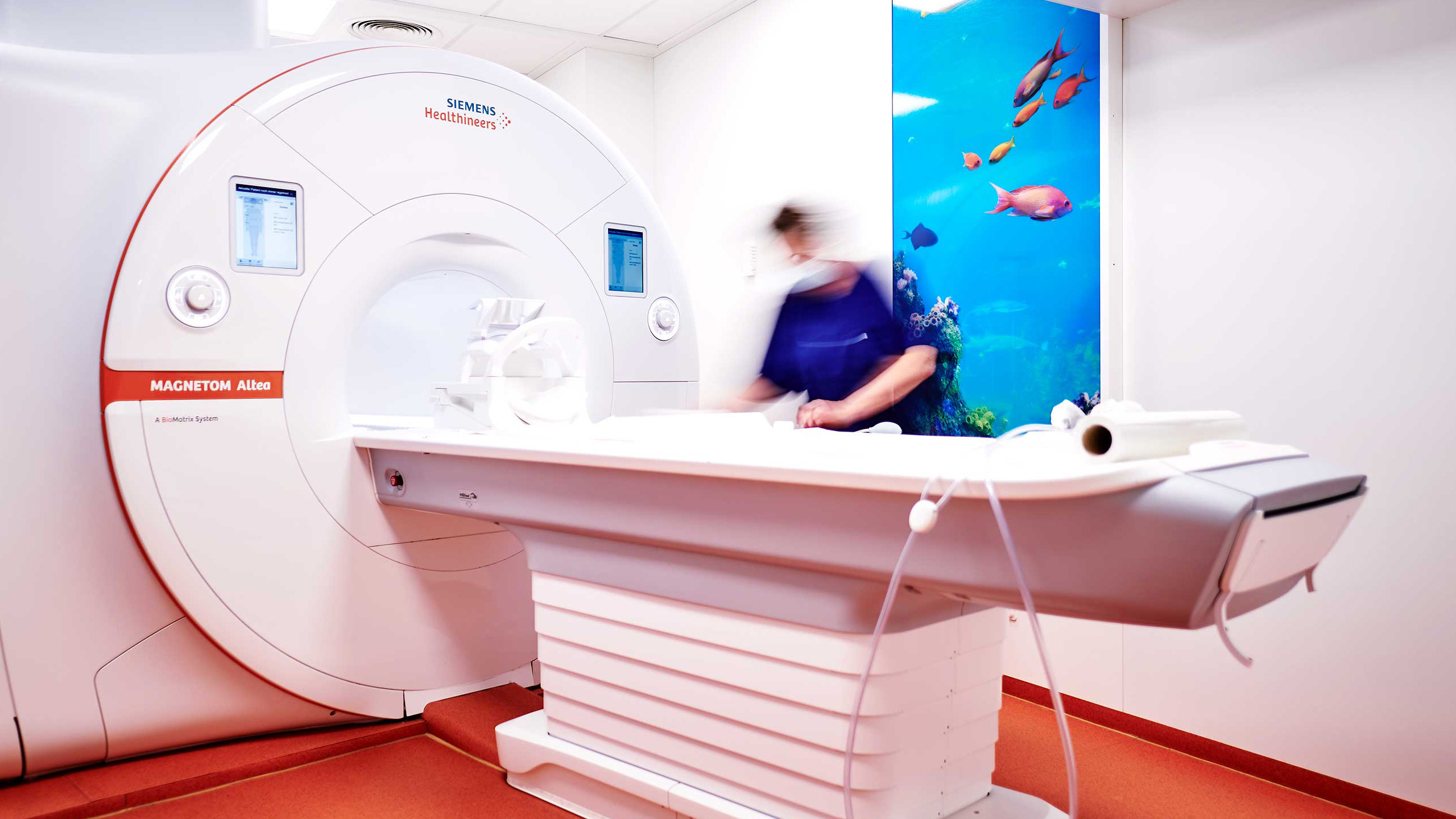
By using AI-based reconstruction, MRI scans can be performed much faster than with conventional techniques.
- Substantially reduced scan times depending on the clinical indication
- In many cases, complete examinations within just a few minutes
- Noticeably shorter time spent inside the MRI scanner
For patients, this means less stress, reduced discomfort, and a more pleasant examination experience.
Improved Image Quality – Even with Faster Scans
Deep learning–based reconstruction processes raw data directly and optimizes image quality in real time.
- Higher spatial resolution and sharper anatomical detail
- Improved signal-to-noise ratio with reduced image noise
- Reliable diagnostics even with accelerated acquisition
This effectively eliminates the traditional trade-off between speed and image quality.
Enhanced Patient Comfort and Reliability
The combination of faster scans and optimized image quality significantly improves the overall patient experience:
- Shorter examination times – particularly beneficial for elderly, pain-sensitive, or claustrophobic patients
- Reduced motion artifacts due to faster acquisition
- More efficient and smoother examination workflows
Efficiency and Quality in Modern Radiology
Beyond patient comfort, AI-supported MRI technology also improves operational efficiency:
- Higher throughput without compromising diagnostic quality
- Faster availability of imaging results
- Standardized and reproducible imaging
Our Commitment
By integrating advanced technologies such as Deep Resolve Boost, we combine maximum diagnostic accuracy with outstanding patient comfort—delivering modern, efficient, and patient-centered radiology.
Special MRI examinations.
In addition to the usual MRI examinations of numerous organ areas, we offer the following MRI examinations of various body regions:
- Prostate MRI
Multiparametric MRI (mpMRI) of the prostate is the best imaging technique to detect or rule out a clinically significant prostate tumor. Further information on the prevention and diagnosis of prostate cancer can be found on the website of our Prostate Diagnostics Competence Center. - MR Angiography
MR Angiography (MRA) is a study of the blood vessels that can be performed with or without intravenous gadolinium (non-iodine) contrast depending on the region of the suspected problem. According to your symptoms, your doctor may want an MRA to assess vascular patency or the presence of any narrowing or stenosis which could cause your symptoms, as well as look for any vascular abnormalities or malformations. - Cardiac MRI
Cardiac MRI allows non-invasive examination of the heart such as inflammation (e.g. myocarditis) and changes secondary to coronary heart disease such as scars or inadequate blood supply of the heart muscle. Further information can be found on the page of our Competence Center Cardio Diagnostics.
Important: If you have a medical implant (cardiac pacemaker, brain pacemaker, older heart valves, pain pumps, etc.), in most cases you cannot be examined by MRI, as damage to your implant may occur. Please inform us of any implants or implanted devices when you make your appointment and be sure to bring your implant passport with you for the examination.
If your implant is not safe for MRI, we will try to address your situation with an alternative diagnostic procedure.
Pregnancy: MRI should not be performed within the first trimester.